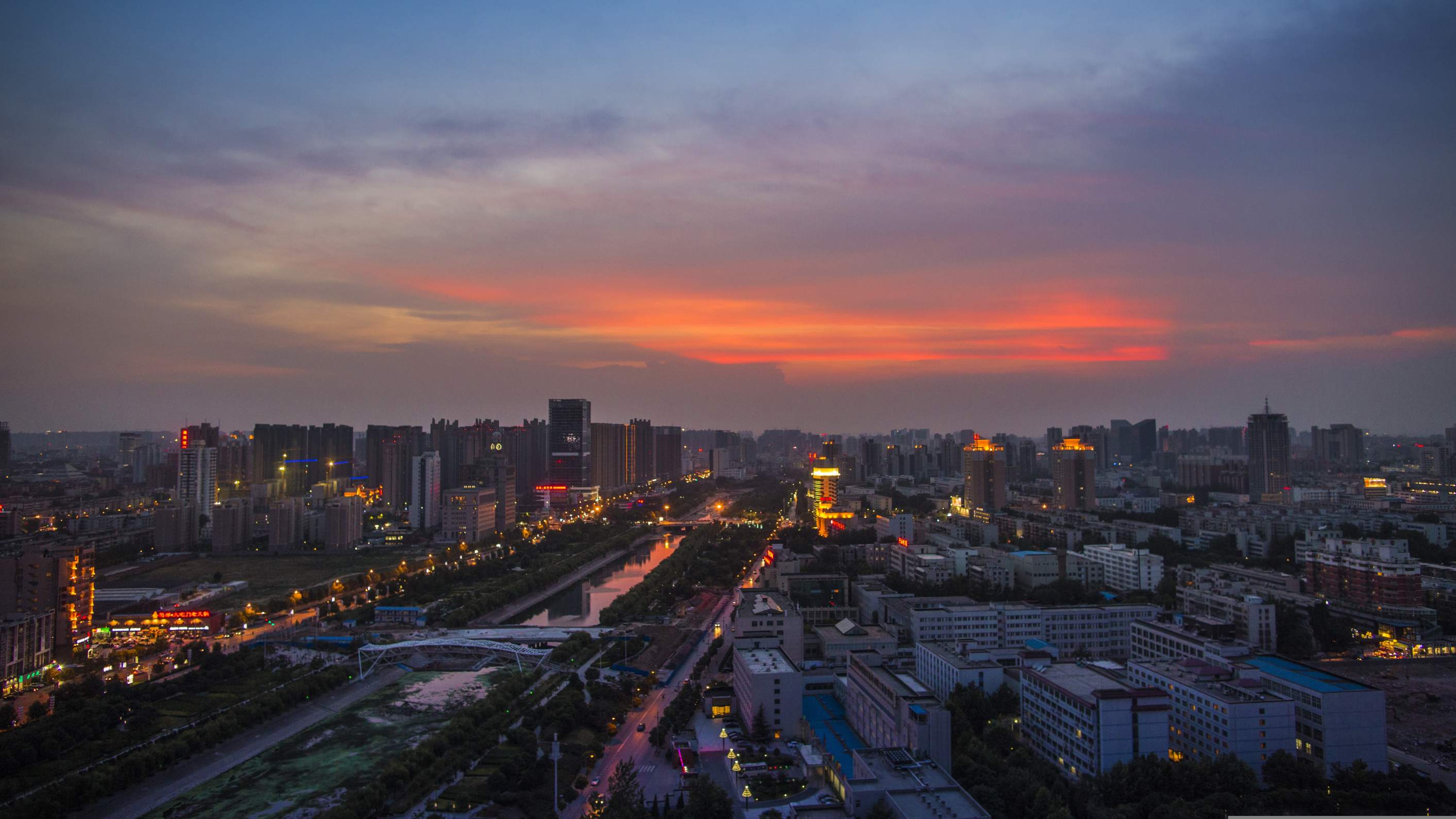
The Most Underestimated "Digital Brain" in Central China: Is Zhengzhou's Smart City Already This Impressive?
Zhengzhou has transformed from a traditional transport hub into a leading smart city. Driven by its "city brain," it uses data integration to enhance governance, traffic, and public services, offering a pragmatic, application-driven model for urban digitalization.
When mentioning Zhengzhou (Henan province) the public's first impressions often linger on "a city built by railways," "China's granary," or the much-discussed logistics hub in recent years. For a long time, Zhengzhou's city label was heavy and traditional, seemingly separated from "high-tech" and "digitalization" by the Yellow River. However, as we peel back the layers and delve deep into the fabric of this national central city, we are astonished to discover that Zhengzhou's smart city construction has quietly completed a magnificent transformation from "following suit" to "running alongside," and even "leading the way" in certain areas.
In 2026, standing at the deep end of digital transformation and looking back, Zhengzhou is no longer just an inland city relying on demographic dividends and its transportation hub status. Through the deep empowerment of its "city brain," Zhengzhou is restructuring its urban governance logic, using data flows to unblock the meridians of people flows, logistics, and capital flows. This is not just a technological innovation but a reshaping of the city's very genes.
Extreme Weather Tests Accelerated Zhengzhou's Transformation
The rise of Zhengzhou's smart city is not an overnight achievement but stems from its highly forward-looking top-level design. As early as the initial stages of the "14th Five-Year Plan," Zhengzhou established the strategic core of "Digital Zhengzhou," proposing the construction concept of "one brain governing the entire city, one network managing the whole domain." Unlike the fragmented, siloed information construction in many other cities during the early stages, Zhengzhou focused on breaking down data silos from the very beginning.
The establishment of the Zhengzhou Big Data Administration marked the elevation of data resources to the height of strategic assets. By building a unified municipal government cloud platform and a data sharing and exchange platform, Zhengzhou achieved cross-departmental and cross-level data integration. According to public data, by the end of 2025, Zhengzhou had aggregated over ten billion items of various public data, covering dozens of high-frequency livelihood areas including transportation, healthcare, education, and social security. This "domain-wide perception" capability allows city managers to grasp the city's operational status in real-time, just like checking a car's dashboard.
Especially after experiencing several extreme weather events in 2024, Zhengzhou accelerated the digital construction of a "resilient city." The new smart flood prevention system integrates multi-source data from meteorology, water resources, and urban management departments, using AI algorithms for flood risk prediction, achieving a transformation from "passive disaster relief" to "active disaster prevention." This technology iteration based on practical pain points has made the foundation of Zhengzhou's smart city exceptionally solid.
The "Digital Brain" Embedded in Daily Life
The ultimate goal of a smart city is not to showcase technology but to benefit the people. The most intuitive results of Zhengzhou's smartification are reflected in the subtle details of citizens' daily lives.
In terms of transportation, Zhengzhou's "City Brain · Transportation Edition" serves as a model. Facing the commuting pressure of a ten-million-plus population, Zhengzhou didn't simply rely on building more roads and bridges but optimized traffic efficiency through intelligent signal light control. On main roads in Zhengdong New District and Jinshui District, adaptive signal control systems dynamically adjust traffic light durations based on real-time traffic flow, increasing average peak-hour travel speeds by over 15%. Even more commendable is the "One Network for Parking" project, which connects data from tens of thousands of parking spaces across the city to the cloud. Citizens can search for spaces, navigate, and make payments seamlessly via their phones, significantly alleviating the persistent urban problem of "difficult parking."
In the realm of government services, the "Zheng Bang Ban" (Zhengzhou Easy办) APP has become a "palm treasure" for millions of citizens. From newborn registration to business establishment approvals, Zhengzhou vigorously promotes "one-time processing for one thing" and "service without certificates." Relying on a comprehensive electronic certificate repository, the online availability rate of government service items in Zhengzhou is nearly 100%, truly realizing "data running more, people running less." This ultimate convenient experience has greatly optimized the business environment, attracting a large number of digital economy enterprises to settle in the Zhongyuan Science and Technology City.
Furthermore, Zhengzhou has distinctive features in the construction of smart healthcare and smart communities. Relying on data interoperability within medical alliances, remote diagnosis and treatment cover most county-level hospitals, allowing grassroots people to access provincial-level expert services close to home. In the renovation of old residential communities, the integration of digital facilities such as smart access controls and care systems for the elderly living alone has injected new vitality into old neighborhoods, showcasing the humanistic warmth of technology.
A Tale of Two Cities: A Comparative Perspective with Wuhan
To objectively evaluate the level of Zhengzhou's smart city construction, comparing it with Wuhan, another core city in Central China boasting numerous universities and research resources, provides an excellent perspective.
Wuhan, as the home of "Optics Valley," has inherent advantages in optoelectronic information industry and underlying technology R&D. The foundation of its smart city construction is "hardcore technology." Wuhan is at the forefront nationally in AI algorithms, chip development, and industrial internet platform construction. Its "E Hui Ban" (Hubei Easy办) app has deep roots in cross-provincial services and the depth of enterprise services. Wuhan's model is more like a "technology-driven" template, focusing on the digital upgrade of industrial chains and the application of cutting-edge technologies.
In contrast, Zhengzhou's smart city construction presents a distinct "scenario-driven" and "hub-featured" characteristic.
Clear Differentiation in Positioning: Wuhan excels in "R&D," while Zhengzhou wins in "Application." Zhengzhou doesn't blindly pursue comprehensive self-development of underlying technologies. Instead, it excels at leveraging mature solutions, combining them with its unique role as an international comprehensive transportation hub to create a distinctive "smart logistics" system. The multimodal transport data platform built in Zhengzhou Airport Economy Zone enables visual tracking and intelligent scheduling across the entire logistics chain. The digitalization level in this specific field even surpasses Wuhan, holding a leading position nationwide.
Different Granularity of Governance: Wuhan's smart city primarily serves its vast industrial system and scientific research clusters, whereas Zhengzhou focuses more on the urban governance and public services for a super-large population. In areas like managing the mobility of a mega-city's population and equalizing basic public services, Zhengzhou's "grid + digital" model demonstrates extremely high execution efficiency and response speed. For instance, in the "capillary" level governance such as migrant population registration and standardized management of shared bikes, Zhengzhou's response mechanism is notably more agile.
Depth of Data Integration Tells the Tale: Although Wuhan is home to numerous universities and rich in data talent reserves, Zhengzhou has shown stronger administrative drive and coordination capability in breaking down administrative barriers and achieving city-wide data centralization. Zhengzhou's "city brain" currently leads in Central China in terms of the breadth and real-time nature of data aggregation, giving it a slight edge in data support capabilities for emergency command and macro-level decision-making.
Of course, Wuhan still holds a lead over Zhengzhou in original innovation capabilities and the clustering of high-end digital industries. Zhengzhou's strengths lie in the richness of its application scenarios and the speed of implementation, while Wuhan's advantage lies in the depth of its technological origins. It's not simply a matter of one being better than the other; they represent two successful paths of digital transformation for central and western cities: one is "technology-led" relying on scientific and educational advantages, the other is "application-driven" leveraging geographical location and governance needs.
Future Outlook: Challenges and Prospects
Despite its remarkable achievements, Zhengzhou's smart city construction still faces challenges. First is balancing data security with privacy protection. As the volume of aggregated data grows exponentially, building a robust security defense line is paramount. Second is the digital divide: ensuring that the elderly and low-income groups can better enjoy the digital dividends and avoid being left behind by the times requires more institutional warmth and consideration. Finally, establishing a sustainable operational model—transitioning from sole government investment to market-oriented operations and stimulating the vitality of private capital—is key to future development.
With the advancement of the national computing power network hub nodes, Zhengzhou is poised to become a computing power highland in Central China. The future smart city of Zhengzhou will no longer be limited to connecting information but will advance towards the intelligent stage of "cognition" and "decision-making." AI large models will play a more significant role in urban governance, from predicting traffic congestion to simulating urban planning, from personalized education recommendations to precise medical solutions—Zhengzhou will become even more "insightful."
Zhengzhou's smart city construction is understated yet pragmatic; it doesn't pursue a pile-up of concepts but directly targets the pain points of people's livelihoods. In the co-opetition with brother cities like Wuhan, Zhengzhou has forged a digital path that aligns with its own endowments. It proves that smart cities are not exclusive to first-tier cities like Beijing, Shanghai, Guangzhou, and Shenzhen. Inland central cities can also ride the digital wave and forge ahead by leveraging precise positioning and efficient execution.
Zhengzhou's practice tells us that the essence of a smart city lies not in how many black technologies it possesses, but in whether it truly uses technology to solve urban problems and warm the lives of its citizens. As data flows surge across the Central Plains, a more efficient, greener, and more livable modern Zhengzhou is showcasing the infinite possibilities of "Digital Central Plains" to the world with an unprecedented attitude, also providing a valuable "Zhengzhou Sample" for similar cities in China and globally.
Source: https://news.qq.com/rain/a/20260317A05NRL00
Translated By: 7ITSNEWS