TransiT Hub gets £46m for UK decarbonisation using digital twins
The UK’s TransiT Hub, a partnership of 8 universities and 67 firms, obtains £46m total funding. It leverages digital twins to design low-cost, low-carbon transport systems, with £20m from EPSRC and £26m from cross-industry stakeholders.
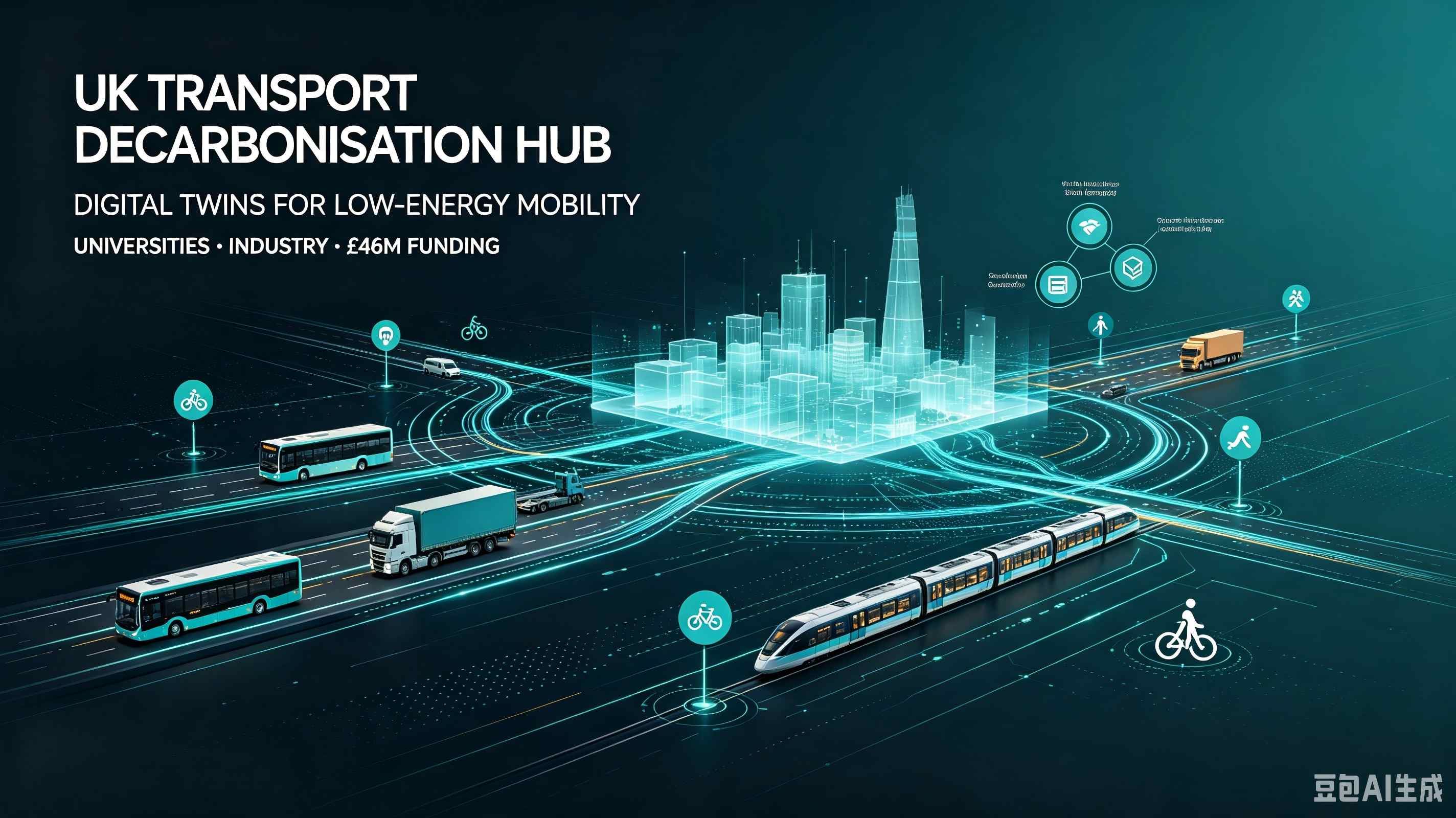
A new academic-industry partnership focused on decarbonising transport in the UK has secured £46 million for its work.
The TransiT Hub, a collaboration of eight universities and 67 partners, is jointly led by Heriot-Watt University in Edinburgh and the University of Glasgow.
Its focus is on using digital twins to identify low-cost and energy-efficient means of reducing transport's environmental impact.
£20 million of the funding comes from the UKRI Engineering and Physical Sciences Research Council (EPSRC), the main funding body for engineering and physical sciences research in the UK.
Another £26 million is being provided by stakeholders across the digital, energy and transport sectors, including transport operators, regulators, vehicle makers, technology companies and energy suppliers.
“Transport accounts for about a third of UK carbon emissions and, with global temperatures rapidly rising, we have run out of time to carry out real-world transport trials and learn from them," says Professor Phil Greening, logistics expert at Heriot-Watt University and joint director of TransiT.
"So, if the UK is to meet its carbon reduction commitments, we have to do our experiments digitally. We need to design the future transport system and optimise the transition to it."
“Digital twins will help us see the where, what and how to decarbonise transport. We start by building individual models of real-world transport systems. These can then be connected together and linked to the real world to give a bigger picture of what our future decarbonised transport system might look like – and the lowest cost way of getting there.”
The benefits of digital twins
For example, passengers could benefit from a “personalised digital twin assistant”, says Professor David Flynn, whose work is in cyber physical systems at the University of Glasgow, and who is also a joint director of TransiT.
“This is similar to how your Netflix or Amazon account learns your preferences, and will build an understanding of your mobility needs, journey requirements and personal preferences."
“The digital twin assistant will then offer near to real-time journey options that are end-to-end and that best fit your needs,” Flynn adds.
EPSRC’s £20 million investment is its largest to date in digital twinning of the UK’s transport system.
“Digital twins offer an enormous opportunity to decarbonise our transport networks by testing the potential impact of changes more quickly, reducing costs and helping us to design the transport networks we need, when we need them," says Professor Charlotte Deane, EPSRC executive chair.
“Passengers and commuters will benefit through being able to choose the most sustainable travel choices, while transport operators will be able to speed up their work to provide low-carbon services."
“TransiT is the result of considerable work between UKRI and government to identify how we can best harness the expertise of a wide range of partners across academia, industry and other organisations to ensure that we seize the opportunities digital twins offer."
TransiT's partners include Amazon Web Services, Bentley Systems, Intel Corporation, Mott Macdonald, National Highways, Nokia, NVIDIA, Siemens Mobility, Transport for London and WSP
The eight universities in the TransiT Hub include Heriot-Watt University (whose expertise is in logistics and freight); University of Glasgow (digital twinning and cyber physical systems); University of Leeds (transport decarbonisation policy development – including the university’s Institute for Transport Studies); University of Cambridge (road freight – including the Centre for Sustainable Road Freight); and Durham University (engineering of public transport systems).
Source: https://www.itsinternational.com/news/transit-hub-gets-ps46m-uk-decarbonisation-using-digital-twins