FAA Launches Phase 2 of BEYOND Drone Integration Program
The FAA has launched Phase 2 of its BEYOND program, inviting proposals to enhance complex drone operations and integration into the national airspace system by September 10. This expansion opens avenues for contractors focused on drone technology and regulatory compliance, with implications for federal investments and contracting opportunities in this evolving sector.
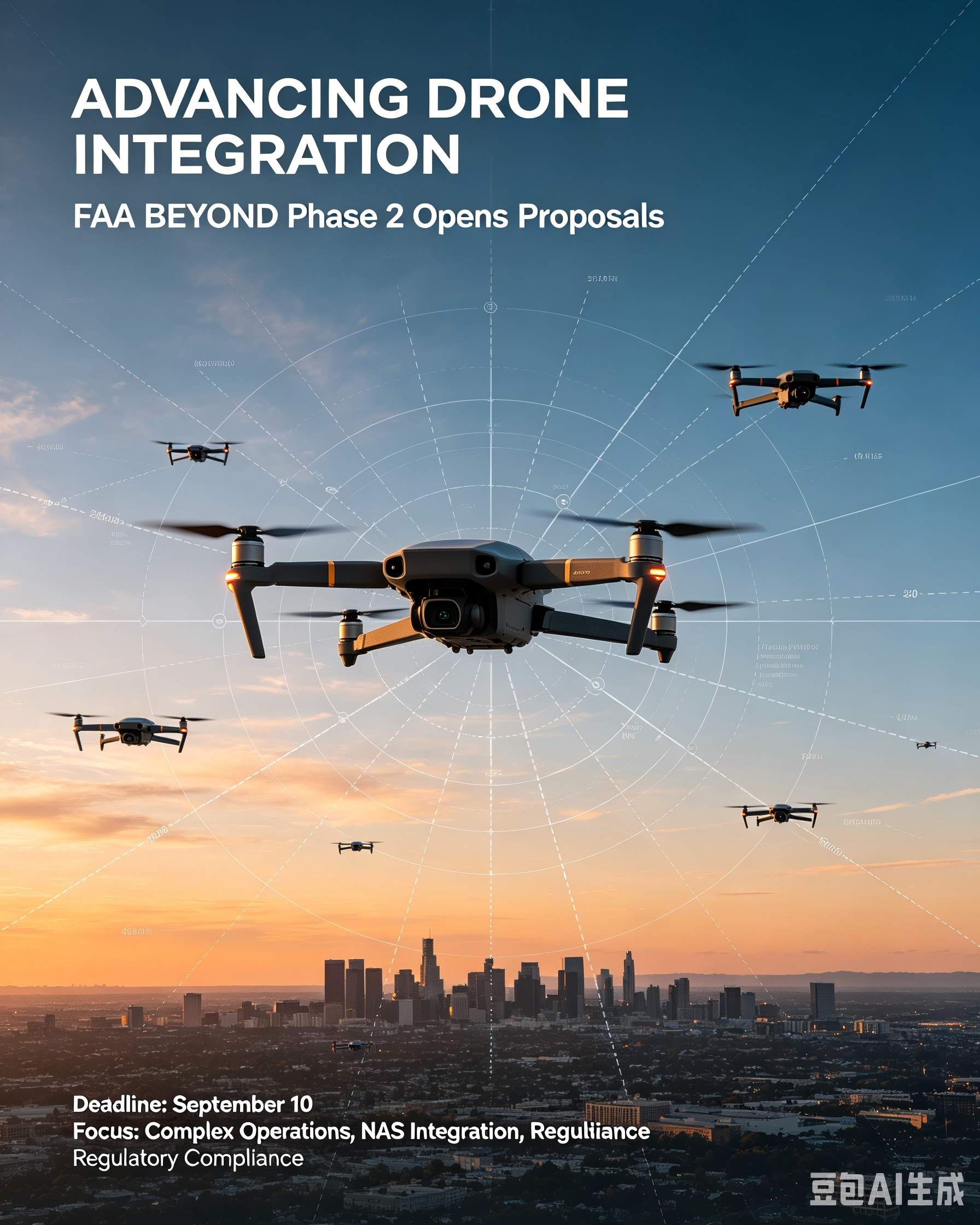
The Federal Aviation Administration (FAA) is taking significant steps to advance the integration of drone technology into the national airspace system (NAS) with the official commencement of Phase 2 of its BEYOND program. Announced on August 27, 2026, this new phase aims to expand collaborative partnerships by selecting up to eight state, local, tribal, and territorial entities to lead efforts in complex drone operations—including beyond visual line of sight (BVLOS) missions, public safety tasks, and on-airport drone activities. The solicitation for participation is currently open, with proposals due by September 10, 2026.
This expansion showcases the FAA's commitment to fostering innovation in unmanned aircraft systems by addressing the intricate challenges associated with advanced drone operations. With the successful completion of Phase 1, where participants logged over 70,000 flights, including more than 48,000 BVLOS operations, the agency aims to leverage the lessons learned to develop a scalable regulatory framework grounded in real-world data. According to FAA Administrator Bryan Bedford, “Phase 2 of BEYOND will expand the partnerships and operations needed to address remaining challenges in beyond visual line of sight operations, public safety missions, on-airport operations and other complex airspace environments.”
The BEYOND program enhances the existing framework by promising to allocate federal resources aimed at integrating drones into the NAS in a way that emphasizes safety and efficiency. The FAA is looking for participants who can push forward the focus areas of infrastructure, scalability, safety, and automation. The operational arenas include refining public safety applications, addressing needs in controlled airspace, and facilitating drone operations in areas with inadequate infrastructure or across international borders.
For procurement professionals and companies specializing in drone technology, this expansion is a pivotal moment. The emphasis on recruiting diverse governmental participants indicates a mindfulness toward varying operational needs and innovative solutions. The FAA is clear that it intends to award eight contracts under this solicitation, with the possibility of additional awards depending on resources. This opens up a competitive field for contractors with the capability to meet the established criteria and contribute to the overarching goals of improved drone operations.
Notably, the current call for proposals requires entities to outline their specific plans for drone operations, detail the impact of such operations, enumerate the types of drones employed, specify necessary resources, and identify collaborations with industry partners. This thorough application process aims to ensure that only the most capable entities are selected to participate in driving national drone innovation. As noted by Sean P. Duffy, the U.S. Transportation Secretary, this initiative is essential for maintaining the United States' leadership in aviation technology amidst evolving global standards.
Overall, the initiation of Phase 2 not only signifies an ambitious approach to drone integration but also reflects the federal government's readiness to invest in transformative aviation technologies. The implications for contractors are significant; opportunities abound for those providing innovative solutions in drone technology, regulatory guidance, and airspace integration services.
The detailed requirements and context for engagement can be found in the solicitation notice available at SAM.gov.
The FAA is expanding the BEYOND program to integrate drones into the NAS, aiming for safer operations.
Proposals are due by September 10, 2026, providing a timely opportunity for contractors in drone tech.
This phase targets complex operations including BVLOS and public safety missions.
Up to eight additional entities will be invited to lead in drone integration efforts.
Successful Phase 1 operations logged over 70,000 flights, contributing critical data for future BVLOS regulations.
The program emphasizes safety, automation, scalability, and infrastructure improvements for drones.
Companies should align proposals with the focus areas and operational needs outlined by the FAA.
Increased federal investment in drone technology indicates growing contracting opportunities in this sector.
Source: https://samsearch.co/government-contracting-news/faa-launches-phase-2-of-beyond-drone-integration-program-18154