PCI Technology Showcases AI-Powered Rail and Traffic Solutions at XAIR Expo 2026
PCI Technology showcased a range of smart transportation technologies at XAIR Expo 2026, held in Guangzhou from September 3 to 6, including its JiaHong Smart Station solution, rail transit signaling and intelligent inspection systems, the IDPS Urban Traffic Brain, and an AI-powered traffic signal control platform.
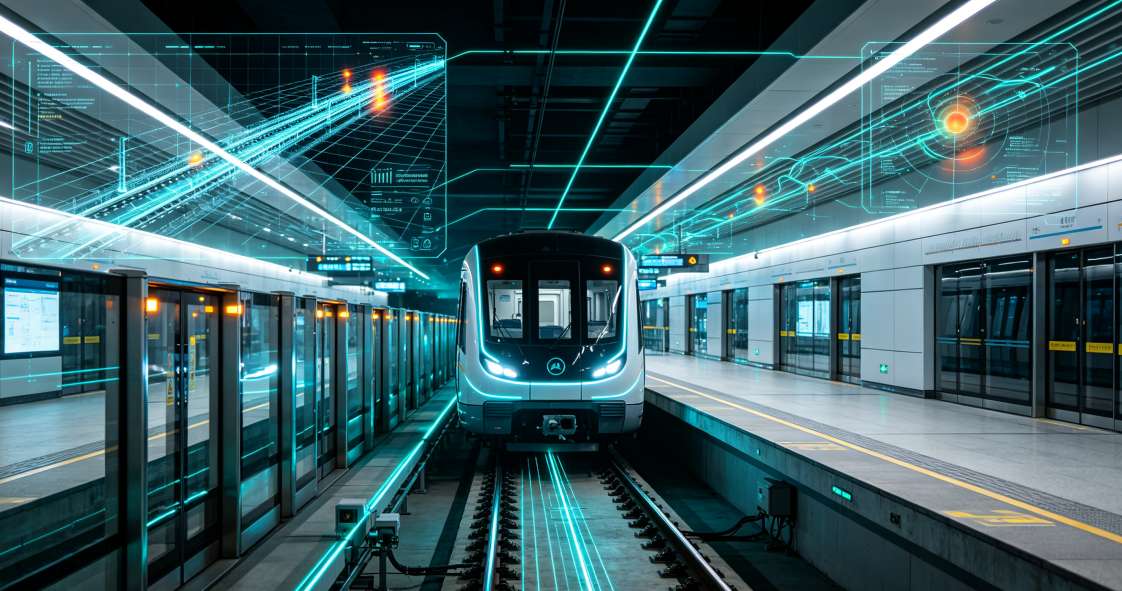
PCI Technology showcased a range of smart transportation technologies at XAIR Expo 2026, held in Guangzhou from September 3 to 6, including its JiaHong Smart Station solution, rail transit signaling and intelligent inspection systems, the IDPS Urban Traffic Brain, and an AI-powered traffic signal control platform.
Smart Station Management
The JiaHong Smart Station solution integrates cameras, public address systems, temperature and humidity sensors, fire emergency phones, and other devices into a unified IoT management platform built on the HarmonyOS ecosystem.
The system extends management from individual stations to station groups. Environmental and equipment data can be monitored in real time, while alerts can automatically trigger operational workflows, enabling closed-loop handling from detection to resolution.
Rail Signaling and Intelligent Inspection
PCI Technology also presented an intelligent inspection system covering rolling stock, power supply systems, and railway infrastructure. The solution incorporates technologies including pantograph-catenary multispectral monitoring, magnetic flux leakage rail inspection, broken-rail detection, and rail neutral temperature monitoring to support condition monitoring across trains and tracks.
The company also showcased a rail signaling system certified to Safety Integrity Level 4 (SIL4), the highest level under the SIL framework. The system comprises Automatic Train Supervision (ATS), Computer-Based Interlocking (CI), Automatic Train Protection (ATP), and Automatic Train Operation (ATO), and supports both Communications-Based Train Control (CBTC) and Fully Automatic Operation (FAO).
Its ATS architecture uses control-center and station-level systems with dual-center hot-standby redundancy, while its all-electronic computer interlocking system is designed around fail-safe principles to support safe, high-density train operations.
AI-Powered Urban Traffic Management
For urban road networks, PCI Technology showcased its IDPS Urban Traffic Brain and AI-powered traffic signal control platform.
The IDPS platform combines digital twins with traffic analytics to model network-wide traffic conditions and supports AI-enabled data querying, automated reporting, and interactive analysis. The system has been deployed in several major Chinese cities for applications including congestion management, road safety, key-vehicle monitoring, and traffic management during major events.
The AI signal control platform connects traffic signal controllers from multiple vendors and combines data from roadside cameras, radar-video fusion systems, and other sensing sources to assess traffic conditions at the intersection, corridor, and network levels.
Using a spatiotemporal decision-making model, the platform generates timing optimization strategies across intersections, corridors, and wider areas, enabling continuous adaptive signal optimization. Natural-language interaction powered by large models is also integrated into the platform to simplify traffic management operations.
NearLink-Based Touchless Metro Access
PCI Technology also introduced a touchless metro access solution combining NearLink short-range wireless technology with OpenHarmony.
Compared with conventional NFC- or Bluetooth-based approaches, NearLink is designed for low latency, high reliability, and strong interference resistance. Fare gates equipped with NearLink modules can detect compatible HarmonyOS smartphones or smartwatches linked to a transit credential, authenticate the passenger, process payment, and open the gate automatically.
The system is designed to allow passengers to walk through fare gates without stopping to scan a card, phone, or QR code.
Source: https://m.10jqka.com.cn/20260905/c679627095.shtml