Apollo Go and Freenow Outline 2027 Driverless Service After London RT6 Demonstration
Baidu’s Apollo Go and Lyft-owned Freenow demonstrated an RT6 robotaxi in London as they prepare for a potential commercial service in 2027, subject to regulatory approval. Safety-driver testing began during the summer, while the companies are working with Transport for London on local operating requirements. The plan calls for tens of vehicles over the next one to two years, with fully driverless testing targeted for 2027.
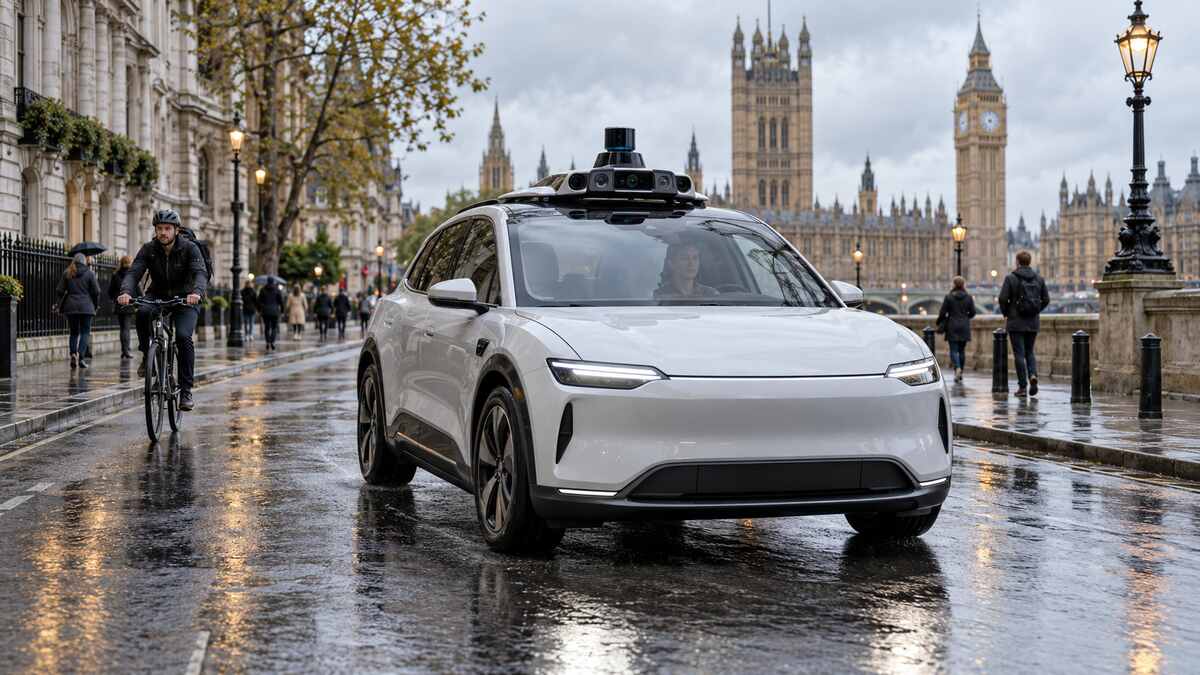
Baidu’s Apollo Go and Lyft-owned Freenow have demonstrated the RT6 robotaxi on London streets as the companies prepare for a possible commercial service in 2027.
Testing with safety drivers began during the summer. The October 22 demonstration showed how the purpose-built electric vehicle handles conditions typical of central London, including narrow streets, speed bumps and 20 mph zones. Apollo Go said it is working with Transport for London as it adapts the system to local rules and road behavior.
The partners expect to operate tens of vehicles in London over the next one to two years. They hope to begin fully driverless testing in 2027, but both that step and any commercial launch remain subject to regulatory approval. The current activity should therefore be described as supervised testing and demonstration rather than a public driverless service.
Freenow would provide the ride-hailing interface and local operating platform, while Apollo Go supplies the RT6 vehicles and autonomous-driving system. The project gives Baidu a potential route into a major European mobility market and gives Freenow access to a purpose-built robotaxi platform. London’s dense, irregular road network will also provide a demanding test of localization, perception and planning before any passenger service begins.
Source: https://www.reuters.com/business/finance/chinas-baidu-tests-robotaxi-london-streets-2026-10-23/